

Most articles about home backup power are written by someone who sells one specific answer. So here's ours, with the conflict of interest stated up front: GRID works with solar companies. We'd still rather you bought the right thing than the expensive thing, so this list includes the options we don't benefit from.
Start with the only question that actually determines your answer: what are you trying to keep running, and for how long?
Keeping a fridge and your phones alive through a six-hour outage is a $600 problem. Running your whole house for three days is a $30,000 problem. Almost everyone who overspends on backup did it by never answering that question out loud.
Here's the ladder.
Level 1 — A portable power station ($500–$1,500)
A big battery in a box with outlets on the front. You charge it, you keep it in a closet, you drag it out when the power goes.
A mid-size unit around 2 kilowatt-hours — Jackery, EcoFlow, Anker and Bluetti all make them — runs about $900 to $1,500 and will keep a refrigerator going for the better part of a day, plus phones, laptops, a router and some lamps.
What it won't do: most of these are 120-volt only. Your central air conditioner, electric range, electric dryer and most deep-well pumps are 240-volt, and a 120-volt unit physically cannot run them. A well pump also draws a startup surge typically two to three times its running wattage, which trips smaller units instantly.
The catch nobody mentions: it only works if it's charged. Outages don't give notice.
Level 2 — A generator ($500–$11,000)
The option the solar industry tends to leave off this list. It shouldn't be left off — for multi-day outages in cold climates, or for a home with a well and no gas service, a generator is often the honest answer.
A portable unit runs $500 to $2,500, plus $400 to $1,300 for a transfer switch so you're not running extension cords through a window. A permanently installed whole-house standby generator, wired to your natural gas or propane, typically lands somewhere between $6,000 and $11,000 installed, with $200 to $650 a year in maintenance and roughly $30 to $170 a day in fuel while it's running.
The part that matters more than the price: the Consumer Product Safety Commission estimates that about 100 Americans die every year from carbon monoxide poisoning caused by portable generators. Between 2011 and 2021 that was 858 deaths — 42% of all non-fire carbon monoxide deaths the agency tracks. A portable generator never goes in a garage, a basement, a crawlspace, or under an open window. Not "with the door open." Outside, well away from the house, every single time.
Look for models certified to the newer CO-shutoff safety standards. The CPSC's own analysis found they would prevent the overwhelming majority of these deaths.
Level 3 — A plug-in battery, for renters ($1,500 and up)
A newer category, and the most interesting development for anyone who can't touch their electrical panel.
Pila's home battery is the clearest example: about $1,500 for 1.6 kilowatt-hours, expandable, and it plugs into a normal wall outlet. No electrician, no permit, no landlord conversation. The company says it'll hold a fridge for around 32 hours. It also charges itself when power is cheap and discharges when it's expensive, which does something for your bill even in months when nothing goes wrong.
It is not whole-home backup and doesn't claim to be. For an apartment, that may be the entire problem solved.
Level 4 — A home battery ($10,000–$18,000 installed)
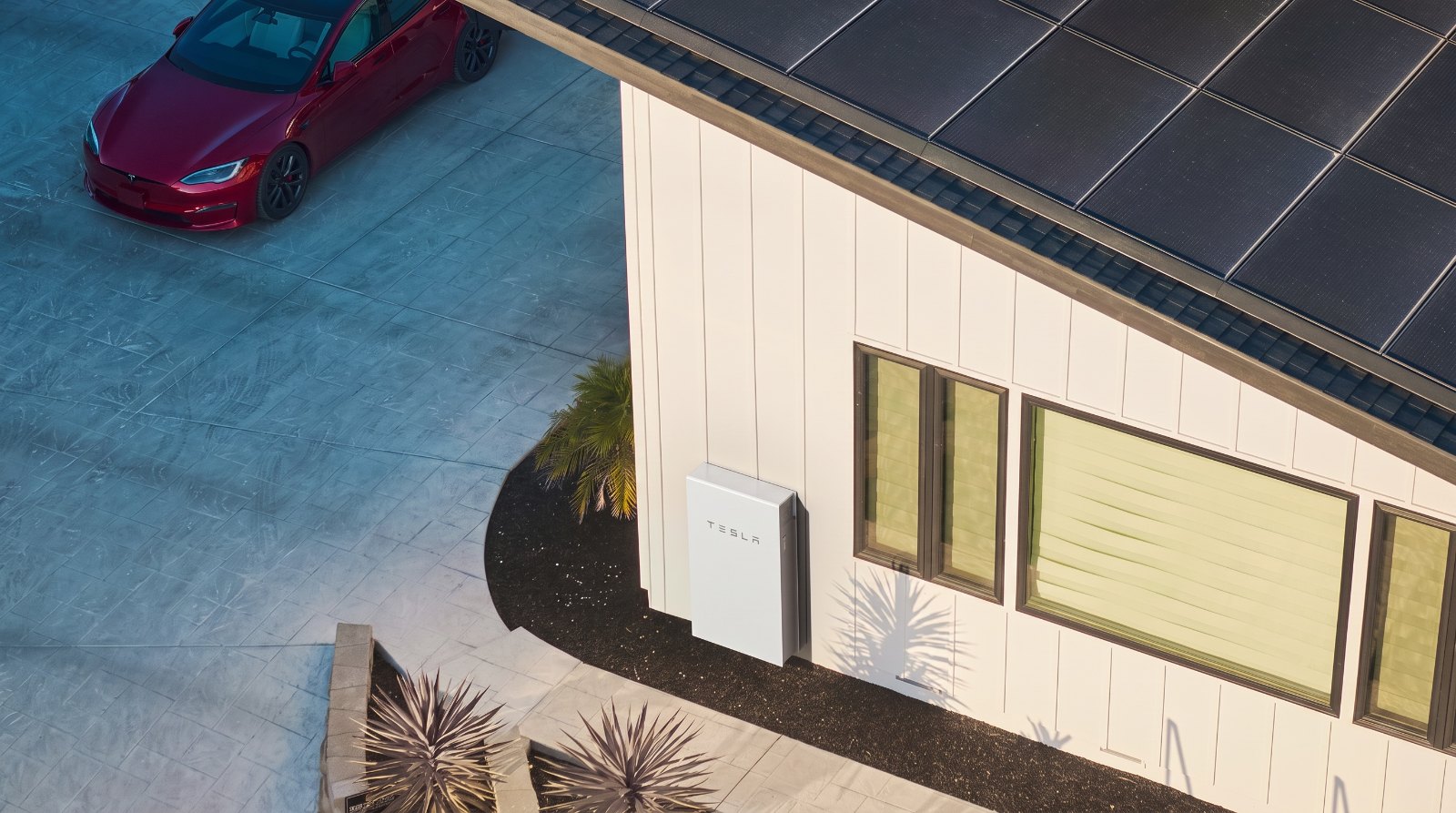
This is the level where "backup" starts meaning what people think it means. A Tesla Powerwall 3, an Enphase IQ battery, a FranklinWH — wall-mounted, wired in by an electrician, switches over automatically in under a second.
Installed prices in 2026 generally run from about $10,000 to $18,000 for a single unit, and the spread is mostly brand and capacity rather than anything you'd notice living with it.
Now the number that should shape your decision. EnergySage's own math on a 13.5 kWh Powerwall: powering an average whole home, it lasts roughly 11 and a half hours. Powering essentials only — fridge, a few lights, phones, WiFi — it lasts about 58 hours.
Same battery. Five times the runtime. The difference is a critical loads panel: a small subpanel your electrician moves the important circuits onto, so the battery stops feeding your electric dryer at 2 a.m.
For scale on why "whole home for days" gets expensive fast: the EIA's 2024 data puts the average American household's electricity purchase at about 863 kilowatt-hours a month — call it 29 a day. Covering that for a full 24 hours takes more than two Powerwalls.
Level 5 — Solar plus a battery
Here's the thing that catches people out, and it catches them out during the outage, which is the worst possible time to learn it.
Solar panels alone will not power your house in a blackout. A grid-tied system is required to shut itself down when the grid fails, so it can't push electricity onto lines a utility crew might be working on. Sunny day, full roof, dark house.
Add a battery and that changes: the battery and inverter create a safe island around your home, and — if the system is configured for it — the panels refill the battery each day. That's the difference between one night of backup and riding out a multi-day event. Ask specifically whether your proposed system does this. Not every configuration does, and it's rarely volunteered.
Level 6 — The car in your driveway
If you own an electric vehicle, you may already own the biggest battery on your property by a wide margin.
Some vehicles support vehicle-to-load (an outlet in the vehicle, adapter cost $100–$200) and some support vehicle-to-home, which powers your house through your panel and typically costs somewhere between $2,500 and $10,000 in equipment and installation depending on the system.
Two honest notes. First, check that the feature still exists before you buy a car for it — this hardware is changing fast, and manufacturers have discontinued equipment that earlier buyers were told to count on. Second, ask the manufacturer about warranty. Nissan has explicitly stated that using its approved bidirectional charger doesn't affect Leaf warranty coverage; not every automaker has said the same, and "nobody has said no" isn't the same as yes.
Level 7 — Getting paid for it
Once you have a battery, some utilities and providers will pay you to let them use a slice of it on the handful of afternoons a year when the grid is strained. Sunrun's California program, for example, publishes payments of roughly $50 to $150 per battery per year, for events between 4 and 9 p.m. during summer.
Treat this as a rebate on something you were buying anyway, not a reason to buy. These programs change constantly and they close: California's Demand Side Grid Support program suspended the option most relevant to residential customers for the 2026 season, citing budget constraints. Never let a projected VPP payment be the thing that makes a battery pencil.
One thing on the money
The federal tax credit homeowners used to claim on batteries — Section 25D — ended December 31, 2025. If a salesperson mentions a 30% federal credit on a battery you're buying yourself, that's out of date.
California's SGIP program still lists a storage incentive, but read the fine print on which one. The one still open is the equity program for income-qualified households, at $1,100 per kilowatt-hour — and depending on when you apply, it may be a waitlist rather than a reservation. The general-market residential storage budgets were only listed as available through 2025. Check the program's live status yourself before you let any of it into your math, and don't accept a salesperson's assurance that a rebate is "available."
The short version
Answer the question first — what, and for how long. Then buy the cheapest rung that answers it. A $900 box in a closet solves a real problem for a lot of families, and a $16,000 battery solves a different one. The expensive mistake isn't buying the wrong level. It's buying a level up from the problem you actually have.
GRID doesn't sell solar to homeowners — GRIDcard connects homeowners with verified local solar pros who show their math.